
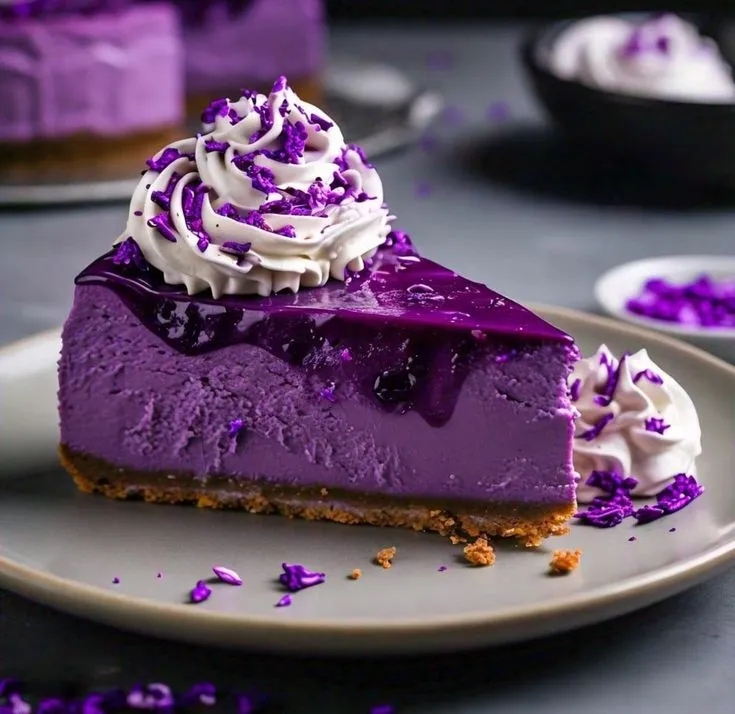
Working with a Natural Food Color Supplier becomes easier when the discussion begins with the finished product rather than a shade card. Developers should share the product’s pH, processing temperature, storage conditions, and whether the formula is mainly water or fat. FoodRGB offers natural colors in powder, liquid, oil-suspension, and custom formats, giving manufacturers several ways to test compatibility. That matters because a color can look impressive on its own yet behave quite differently once acids, proteins, flavors, or other ingredients enter the complete commercial recipe.
Why Purple Sweet Potato Stands Out
Purple sweet potato color comes from anthocyanins, plant pigments that can produce red, fuchsia, and purple tones depending on the surrounding conditions. FoodRGB describes its purple sweet potato system as water-soluble and available in several powder and liquid strengths, along with custom formulations. Its published information highlights strong heat and light performance in acidic environments. For developers working with fruit beverages, confectionery, frozen foods, or other low-pH products, those characteristics make the ingredient worth testing when a familiar synthetic red or purple shade is being reconsidered.
Acidity Changes What You See
The same pigment does not always show the same shade at every pH. FoodRGB notes that purple sweet potato performs especially well around pH 2.0 to 4.0 and can shift from red toward blue as pH rises. This is useful information, but it also explains why bench testing should use the real formula. A developer looking for a purple color for food should measure the actual product rather than assume the color seen in water will remain unchanged after acids, minerals, sweeteners, or flavor systems are added.
Heat Testing Still Belongs in Development
FoodRGB lists purple sweet potato as heat-stable within its preferred acidic range, which can make it useful in products that face thermal processing. Even so, the exact heating step matters. Baking, hot filling, pasteurization, and candy cooking expose ingredients to different temperatures and holding times. A short laboratory check cannot represent every production line. Developers get better information by putting the color through the planned process, then comparing the result after cooling. That reveals whether the shade remains suitable instead of relying only on the ingredient’s technical description.
Solubility Affects the Mixing Step
Because FoodRGB’s purple sweet potato color is water-soluble, it can fit naturally into many water-based formulations. The practical question is how and when it should be added. Mixing order, concentration and the amount of available water can influence how evenly the color disperses. In a beverage, direct addition may be straightforward, while a thicker confectionery or fruit preparation may need a different approach. Trial batches should therefore copy the real mixing sequence. Good dispersion is important because uneven color can become much more obvious after production is scaled up.
Applications Go Beyond Beverages
Purple sweet potato is often associated with drinks because acidic beverages can provide a suitable environment, but FoodRGB lists a much wider set of applications. These include confectionery, ice cream, baked goods and snacks, meat and poultry products, frozen foods, fruit preparations, jelly, popcorn, plant-based meat, and other uses. Not every application will need the same concentration or format. Opaque foods can soften a shade, while clear products may show it more strongly. That is another reason the color should be judged inside the finished product rather than separately.
Storage Can Change the Final Choice
A successful first batch does not finish the evaluation. The product still has to move through packaging, distribution, retail, and normal storage. Light, oxygen, temperature, and time can gradually change how any natural color appears. FoodRGB describes purple sweet potato as having strong light resistance under acidic conditions, but manufacturers should still test their own package and shelf-life expectations. A clear bottle creates a different environment from an opaque pouch. Checking samples at several points helps the team see whether the chosen shade remains consistent enough for commercial release.
Conclusion
Purple sweet potato shows why natural color selection is really a formulation decision. Its anthocyanin pigments can provide red-to-purple shades, particularly in acidic products, but pH, heat, mixing, packaging, and storage all shape the final result. Manufacturers can use foodrgb.com to review natural color options and technical support before moving from trials to larger production. The strongest choice is not simply the most vivid sample on day one. It is the color that fits the recipe comfortably and continues to look right after processing and realistic shelf-life testing.
.png "Quality Driven Turmeric Extract And Color Distribution")
